The definitive guide for wedding planners working in Marrakech and across Morocco — fleet selection, convoy logistics, etiquette, and how to deliver a flawless bridal arrival.
Why Morocco, and Why the Car Matters
Morocco has, in the last decade, quietly become one of the three most-requested destination wedding markets in the world — alongside Lake Como and Mykonos, and arguably ahead of both for couples who want privacy with grandeur. From the gardens of the Selman to the desert palaces of Skoura, the country offers a stage that almost no other can match. Yet the single most overlooked element in every Moroccan wedding production — and the one most likely to derail an otherwise immaculate weekend — is transportation.
This guide is written for planners. It assumes you have already locked the venue, the floral, and the catering. What follows is the architecture of moving 80 to 300 guests, a bridal party, vendors, and a couple from arrival to departure without a single moment of friction. Where planners come to us before the venue is locked, our sister Noor Concierge team handles riad selection, gastronomic curation, and the cultural layer that turns a Moroccan wedding into a remembered one. We have produced this format for clients including Gulf royalty, Hollywood families, and London-based fashion houses; the principles are the same.
The Bridal Vehicle — Build the Story Around the Car
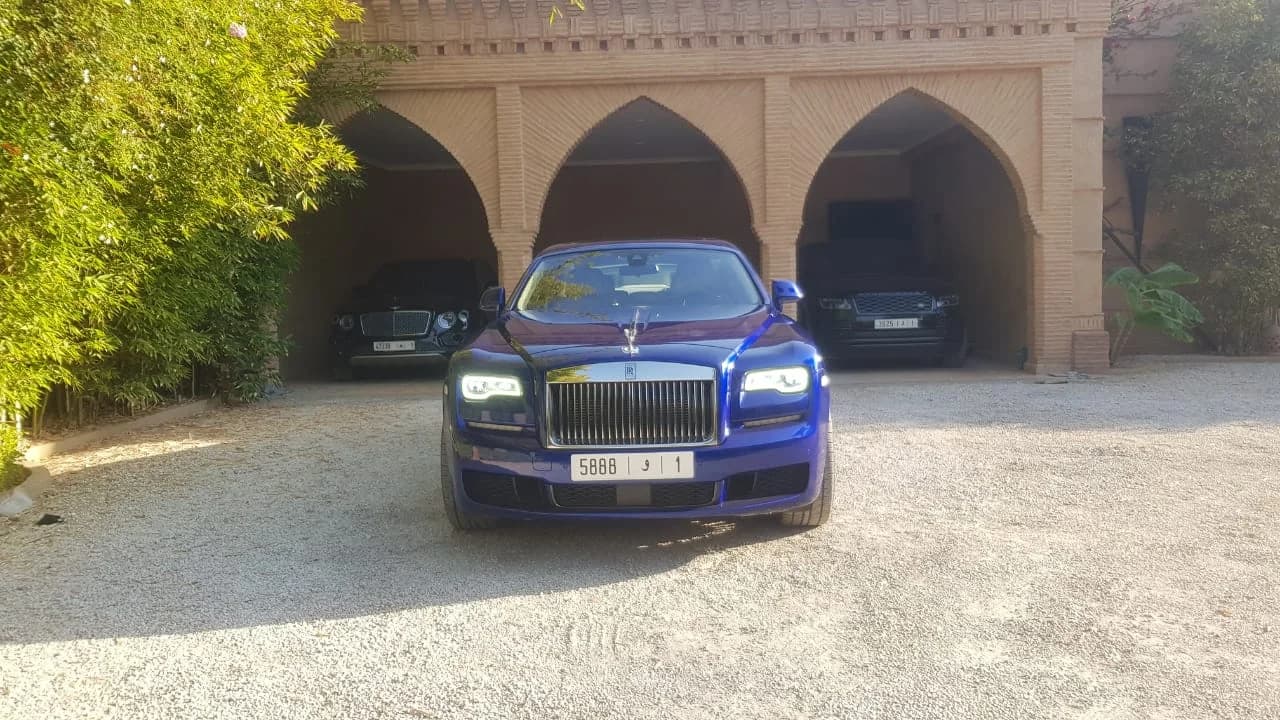
The bridal arrival is the photograph that runs in the magazine. Choose accordingly. For a contemporary couple staging a Marrakech wedding at Beldi Country Club or Ksar Char-Bagh, the Rolls-Royce Ghost in Arctic White is the modern classic — and our most-reserved bridal car of 2025. For a more traditional reception, the Bentley Mulsanne or Flying Spur carries the gravitas of a vintage Rolls without the maintenance risk on the day.
For desert weddings — Agafay, Erg Chebbi, Skoura — the Rolls-Royce Cullinan is the only correct choice. Its ride height handles unsealed approach roads without compromise, and its presence at a kasbah arrival is something no sedan can match. We have, in 2025, also begun deploying a custom-prepared Mercedes G-Wagon for the brides who prefer something with edge.
Whichever you choose: reserve early. We hold one Ghost and one Cullinan exclusively for weddings in Q2 and Q4, and they are typically committed nine months in advance.
Convoy Logistics — Moving 200 Guests
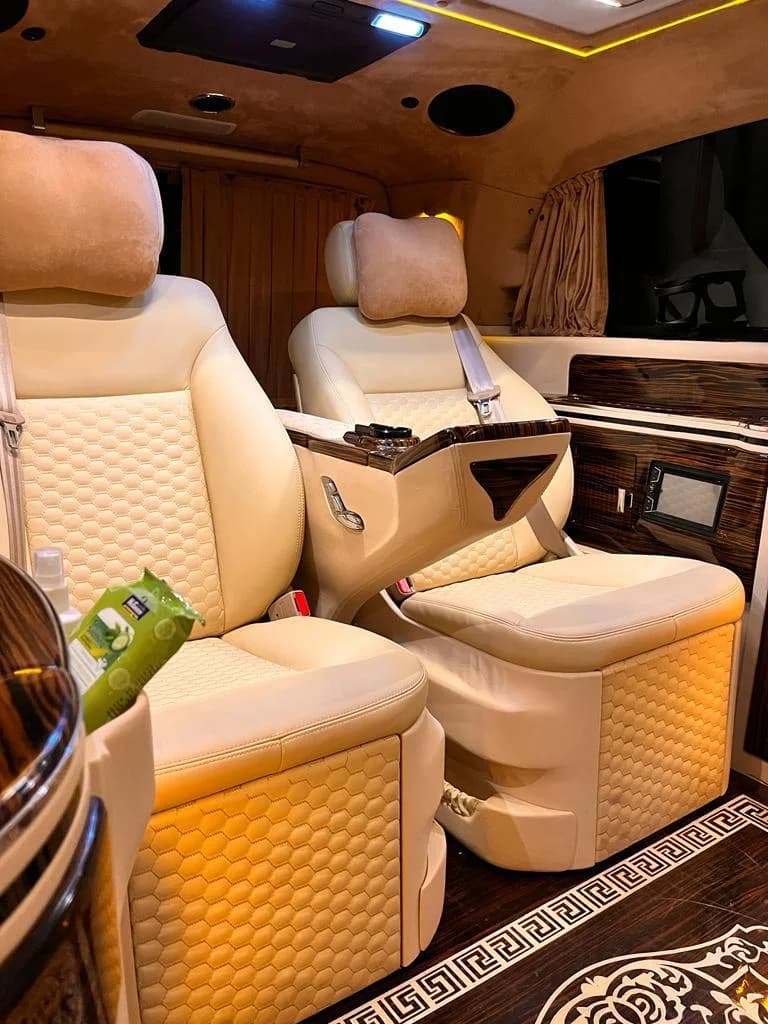
The wedding-day convoy is where amateur operators fail. A 200-guest wedding at a private estate twenty minutes from Marrakech requires, at minimum, six Mercedes V-Class vehicles, two Sprinters, a follow-car for vendors, and the bridal vehicle itself — all coordinated to arrive in tranches that match the venue's reception capacity.
Our planning protocol begins six weeks out: a full timing sheet shared with the venue, the photographer and the planner, with each vehicle's pickup point, route, and arrival window mapped. On the day, every chauffeur carries a printed run-sheet, an event-specific WhatsApp group, and a single point of contact at our chauffeur desk. The result is invisible — and invisibility, at a wedding, is the highest praise.
For Gulf weddings — typically larger, with multi-generational guest lists and gender-separated transport for certain segments — we double the V-Class allocation and assign female chauffeurs where requested. Where the principal family travels with a security detail, Noor Elite Security deploys discreet close-protection officers on the bridal car and the convoy perimeter, in coordination with venue staff. "الزفاف ذكرى تدوم" — a wedding is a memory that lasts — and the logistics must hold up to the photograph forever.
The Three Days Around the Wedding
A serious Morocco wedding is rarely a single day. The standard format is now a three-night production: welcome dinner Thursday, henna or rehearsal Friday, ceremony Saturday, brunch Sunday. Each night requires a transport plan.
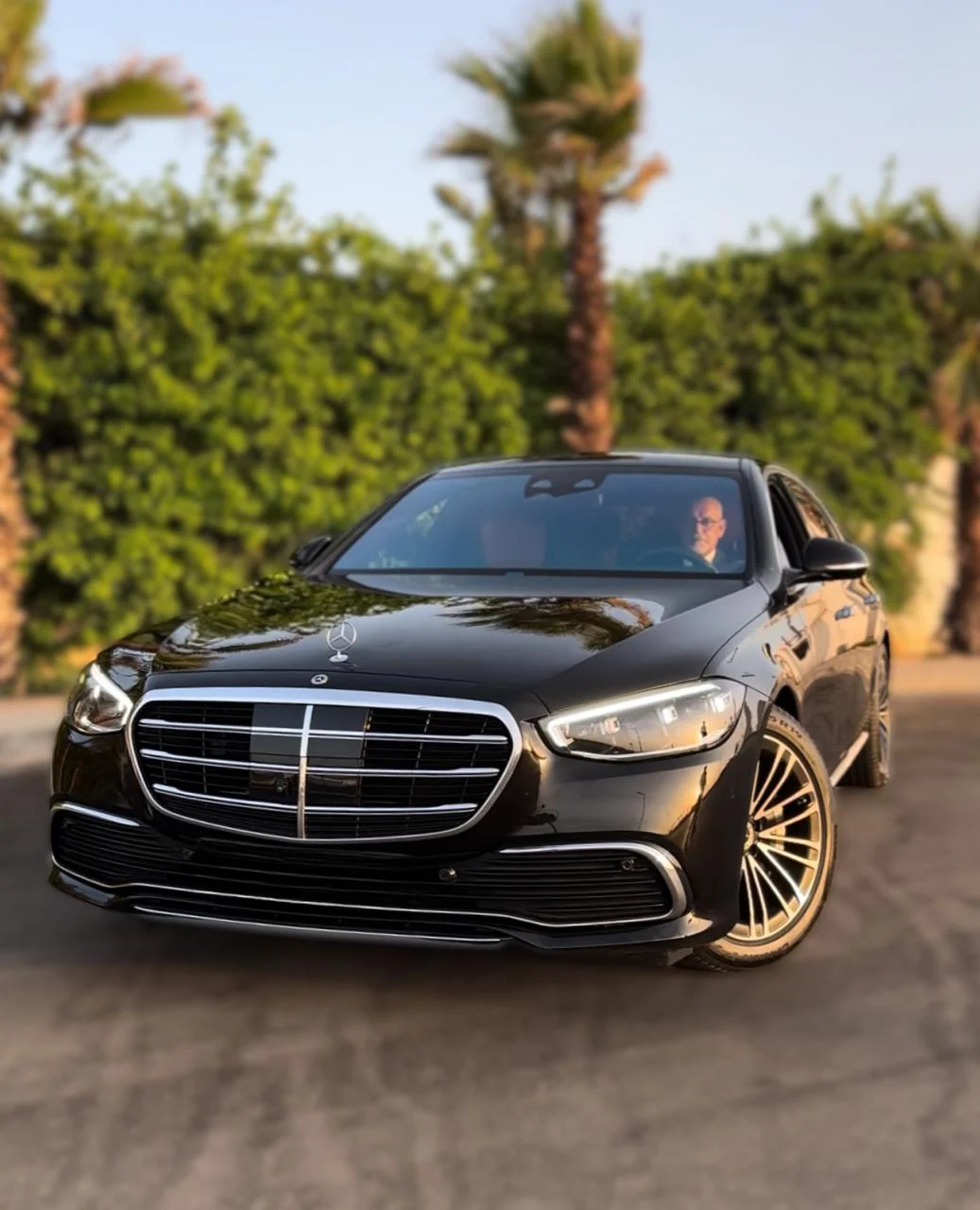
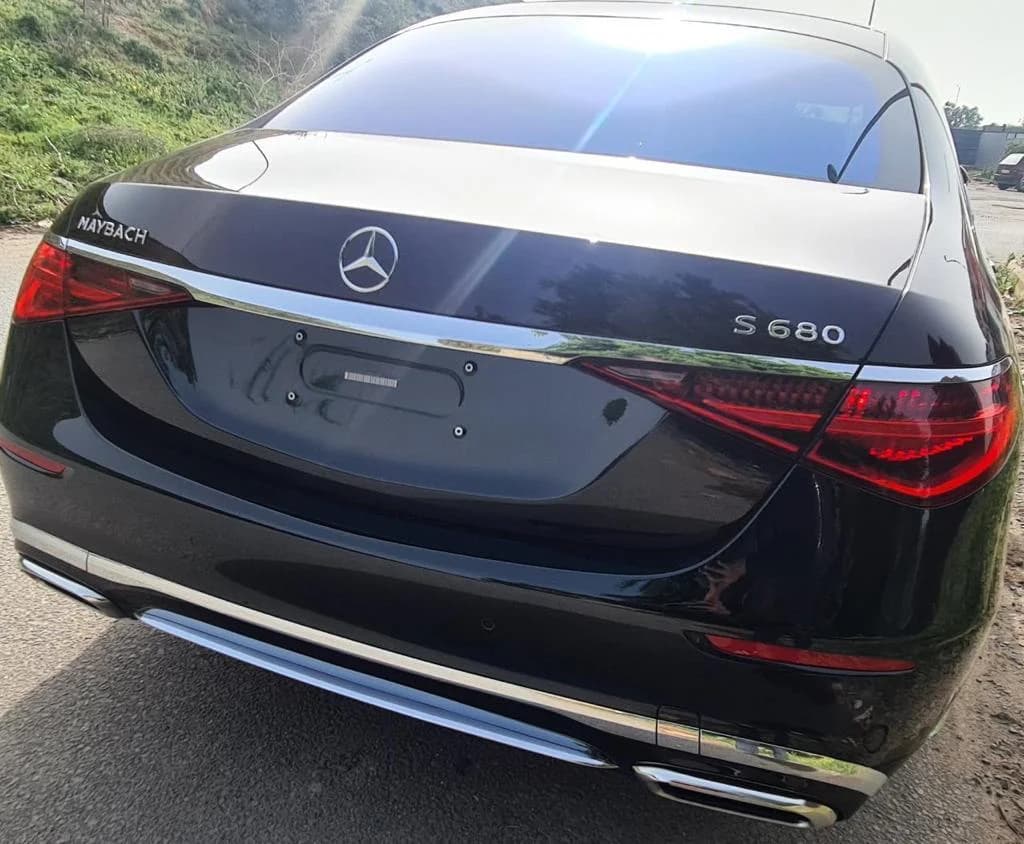
Welcome night transfers — typically hotel-to-restaurant — are best handled by V-Class fleet bookings, with two pre-positioned Mercedes S-Class for the principals. Henna nights, often hosted in the riads, frequently require a Sprinter shuttle running every twenty minutes between the hotel block and the venue from 8 p.m. until 1 a.m. Sunday brunch transfers are the lightest, but the most important: this is where guests leave Morocco with the final impression. We assign our most senior chauffeurs to these runs.
Vendor Movement — The Invisible Layer
Behind every wedding is a vendor operation no guest will ever see, and it requires its own transport plan. Florists working at scale (and in Morocco, this means the Marrakech ateliers producing for Cordis, Belle Île and others) need predictable Sprinter access to the venue from 6 a.m. on the day. Photographers, especially those flying in from Paris or New York, prefer a dedicated S-Class for the morning preparation rooms. The DJ, the band, the hair-and-makeup team — each requires a vehicle.
We treat vendor transport as a separate quotation and a separate fleet allocation. This is not where planners should economise; a delayed florist destroys a ceremony, and a delayed photographer rewrites the album.
Pricing, in Honest Terms
A full three-day Morocco wedding for 150 guests, with bridal Rolls-Royce, six V-Class fleet, two S-Class for principals, two Sprinter shuttles and full vendor support, sits in the region of €18,000 to €28,000 depending on season, distance from Marrakech and the complexity of the bridal arrival. Desert weddings (Agafay, Skoura, Merzouga) carry a premium reflecting the additional driving days and the four-wheel-drive requirement.
We provide planners with an itemised breakdown — vehicle, hours, chauffeur, fuel, insurance, contingency — and we honour the quote even if the wedding runs late. "Le luxe, c'est la précision" — luxury is precision — and that includes the invoice.
How to Begin
Send our wedding desk three pieces of information: your wedding date, your venue, and your headline guest count. From there, we build a transport architecture in 48 hours and refine it across three planning calls before the event. Reach us on WhatsApp at +212 641 079 937, or formally via our contact page. The bride steps out of the car, and the photograph begins. We will make sure she steps out at exactly the right moment.
Reserve your chauffeur